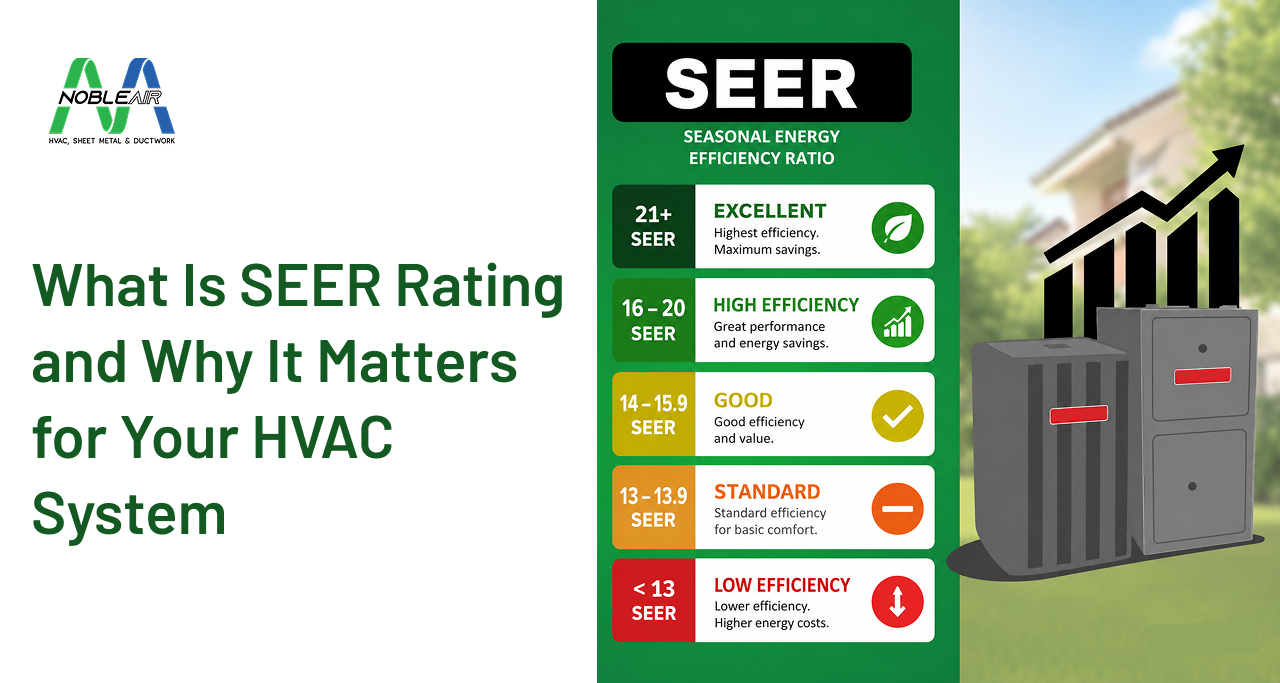
If you have been shopping for a new air conditioner or heat pump, then you have probably seen the term SEER rating more than once.
The first time it might just seem like another technical detail. Something you need to get but no one really explains just simply.
The truth is SEER rating is one of the most important things to look at when choosing an HVAC system.
And not because it sounds cool, but because it directly affects the way your system performs every single day.
This single number is the key to your comfort, your energy bills, and even how long your system lasts.
For instance, two units might appear nearly identical on the outside, but their SEER ratings could tell a completely different story about what you can expect over time.
SEER Rating AC Meaning
Let’s get back to basics, in plain English. SEER is Seasonal Energy Efficiency Ratio. It sounds complicated but the idea behind it is simple.
It is a ratio of the amount of cooling delivered by an air conditioner to the amount of electricity used by that air conditioner over the entire cooling season.
In other words, it offers a very practical answer. How well does this system turn energy into cool air?
If you’ve been searching for things like:
- air conditioner SEER rating meaning
One thing you really want to know is, will the system you are looking at be efficient or expensive to run?
The higher the SEER number, the more efficient the system is at providing the same amount of cooling with less energy. That difference can add up to a noticeable dent in your utility bills over time.
What Does SEER Rating Mean for Your Home Cooling System?
This is where things become more practical. SEER isn’t just a technical spec, it directly affects how your home feels and how much you spend month after month.
A system with a higher SEER rating typically:
- Uses less electricity to maintain the same temperature
- Runs more efficiently during long cooling cycles
- Keeps indoor temperatures more stable
- Experiences less strain over time
That last point is particularly important. The more efficient a system is, the less work it has to do to perform its function. That can reduce wear and tear, which can help the equipment last longer.
And there’s another layer that often gets overlooked. Your HVAC system plays a huge role in your overall indoor environment, not just temperature, but air quality and comfort as well.
If you want to know more about how all the dots connect, this article gives a very clear and practical explanation.
How Is the Seasonal Energy Efficiency Ratio Calculated?
The idea is simple, but it helps to understand what is behind the number. SEER is calculated by using this formula:
Cooling output (BTUs) over total energy used (watt-hours) during a full cooling season.
The important part here is not the formula, it's the timeframe.
Since it’s measured over an entire season, SEER reflects real usage, not ideal lab conditions.
That’s a great help when you’re trying to compare systems in a meaningful way.
Instead of asking, “In ideal conditions, what system works best? You’re asking, “Which system is going to perform better in my home, day in and day out?”
A properly designed HVAC system can improve air quality, humidity control, and overall well-being. This article explains it really well.
Work with Noble Air to Choose the Right SEER Rating
Learning about the SEER rating is a great first step, but choosing the right system isn't just about choosing a number. It’s about finding a setup that suits your home, your comfort and your budget.
That’s where Noble Air can be useful. We want to keep it simple and practical,” their team says. They don’t push the best-rated system, they help you figure out what makes sense for your situation.
That includes:
- Recommending the right SEER rating based on your usage
- Helping you balance upfront cost and long-term efficiency
- Ensuring proper installation so the system performs as expected
- Improving overall comfort and indoor air quality
If you’ve been thinking about upgrading your HVAC system or just want a better understanding of your options, this is a good place to start.
Contact us and get in touch with the Noble Air team to find the right solution for your home.